
Bathroom paint colors need to work with the room’s light, tile, vanity, fixtures, ventilation, and daily moisture. A color that looks balanced on a sample card can appear much warmer, cooler, darker, or brighter after it covers every wall.
Homeowners in Bellevue and nearby communities also need to select a product made for the room, not just a color they like. This guide covers 15 bathroom paint colors to test in 2026, the finish and preparation choices that affect the result, and the factors that shape a professional painting estimate.
Key Takeaways:
Why Bathroom Color Requires More Planning
Bathrooms combine changing light, reflective tile, mirrors, metal finishes, water, and frequent cleaning. These features can make undertones easier to see than they are in a bedroom or hallway.
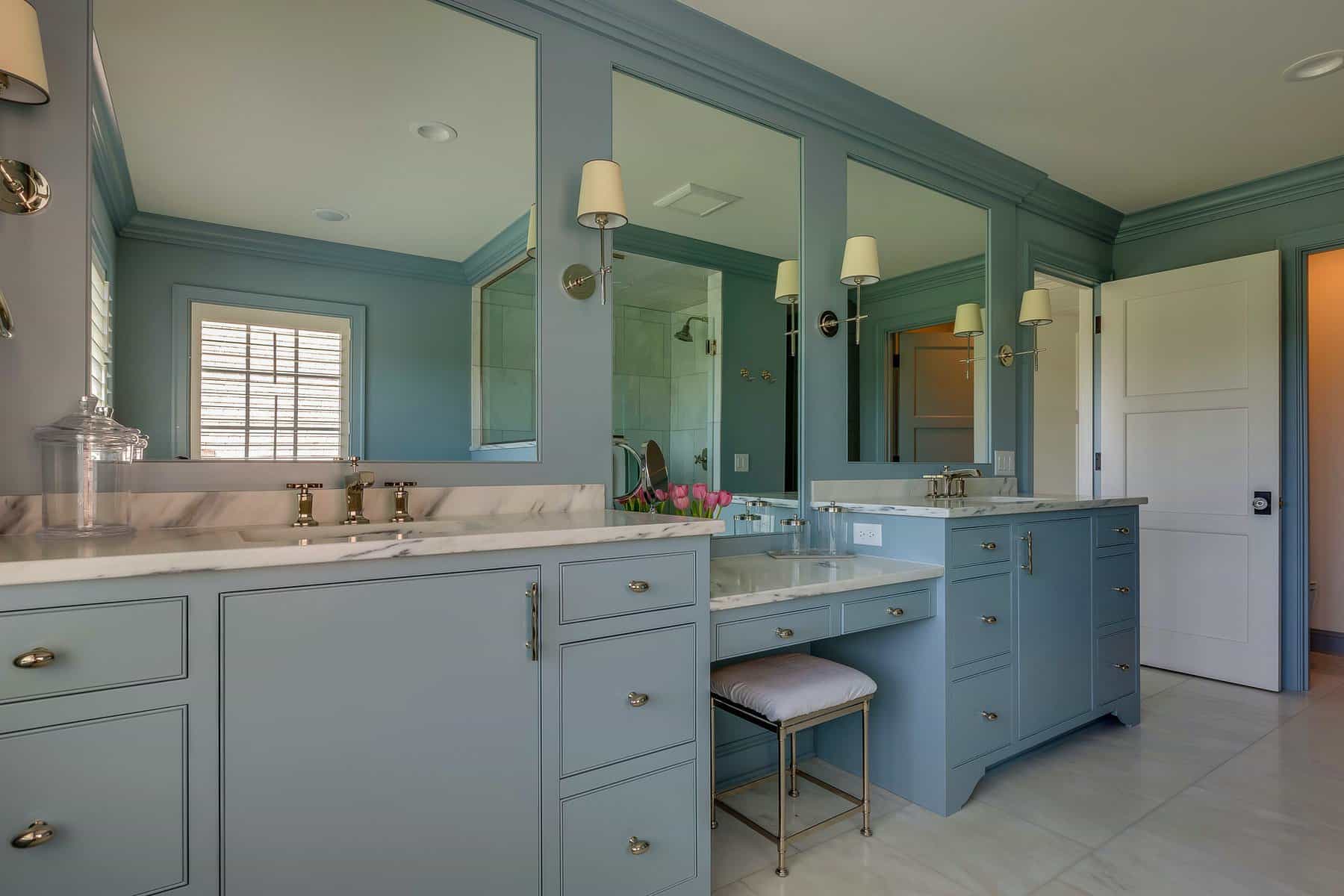
A white wall may look creamy beside cool marble. A gray may lean blue beside white tile or green beside warm wood. Dark colors can look rich under strong lighting but much heavier in a windowless room.
Moisture also affects the coating system. Paint should not be used to cover active leaks, damp drywall, mildew, or damaged caulk. The source needs to be corrected before preparation begins.
The U.S. Environmental Protection Agency recommends controlling indoor moisture, using bathroom exhaust fans, and keeping indoor relative humidity below 60% when possible. Its bathroom mold and moisture guidance explains why ventilation and drying matter before repainting.
Choose the Product and Sheen Before the Final Color
Color and sheen need to be reviewed together. A higher-sheen finish reflects more light and may make the color look brighter. It can also draw attention to wall texture, patches, and roller marks.
Many bathroom coatings are sold in satin, semi-gloss, or specialty matte finishes. A standard matte wall paint and a matte product made for humid rooms may perform differently.
Check the exact product for:
The bathroom should still have working ventilation. A coating labeled for humid rooms cannot correct a weak exhaust fan, plumbing leak, or wet drywall.

15 Bathroom Paint Colors to Test in 2026
These colors are starting points, not guarantees. Test each option in the bathroom and compare it with the fixed finishes before approving the full room.
Warm Whites, Beige, and Greige
1. Sherwin-Williams Alabaster SW 7008: A warm white that can soften the contrast between bright white fixtures and warmer flooring or stone. Check it beside cream tile because the undertones may blend too closely.
2. Sherwin-Williams Accessible Beige SW 7036: A beige-gray neutral that can work with warm tile, wood vanities, and brushed metal finishes. It may read darker in bathrooms with limited daylight.
3. Benjamin Moore Edgecomb Gray HC-173: A warm neutral that sits between beige and gray. Compare it with counters and flooring to see if its warm undertone supports the room.
4. Sherwin-Williams Universal Khaki SW 6150: Sherwin-Williams selected this grounded neutral as its 2026 Color of the Year. It can work in larger bathrooms with white trim, natural wood, or dark fixtures.
5. Dutch Boy Melodious Ivory 313-2DB: Dutch Boy’s 2026 Color of the Year is a creamy neutral. It may provide warmth in bathrooms that receive cool natural light.
Light Blue, Green, and Gray
6. Sherwin-Williams Sea Salt SW 6204: A soft green-blue that can shift between green, gray, and blue as the light changes. Test it beside white tile and warm wood.
7. Sherwin-Williams Rainwashed SW 6211: A clearer blue-green than Sea Salt. It can add color without creating the weight of a deep accent shade.
8. Sherwin-Williams Stardew SW 9138: A muted blue that may work with chrome, nickel, white tile, and cooler stone. Warm bulbs can soften its blue cast at night.
9. Benjamin Moore Classic Gray OC-23: A light neutral gray that may appear close to off-white in a bright bathroom. In low light, the gray undertone becomes easier to see.
10. Behr Caraway Seeds S330-2: A light earthy neutral with more warmth than a cool gray. Compare it with beige tile and wood finishes before committing.
Deeper Green, Brown, and Gray
11. Sherwin-Williams Evergreen Fog SW 9130: A muted green-gray that can support natural wood, cream tile, and dark metal fixtures. It needs enough lighting to keep the room from feeling closed in.
12. Sherwin-Williams Pewter Green SW 6208: A deeper green that can work in a primary bathroom, powder room, or accent area. Test it next to the vanity and flooring because the color has more visual weight.
13. Behr Hidden Gem N430-6A: Behr’s 2026 Color of the Year is a smoky jade. It can create a strong wall color behind white, black, brass, or wood finishes.
14. Benjamin Moore Silhouette AF-655: Benjamin Moore’s 2026 Color of the Year combines brown and charcoal notes. It is best tested in a room with good lighting and clear contrast from the trim and ceiling.
15. Sherwin-Williams Repose Gray SW 7015: A gray neutral that can appear warmer or cooler depending on tile, bulbs, and daylight. Compare it with every fixed gray in the bathroom to avoid conflicting undertones.
How to Test Bathroom Paint Samples
Do not approve a bathroom color from a phone, computer screen, or small sample card. Larger samples show the undertone and brightness more clearly.
Follow this process:
Moveable sample boards are useful when several walls receive different light. This broader guide to choosing paint colors for your home covers undertones, room size, lighting, and fixed finishes.
Small Bathroom Color Choices
A small bathroom does not have to be white. Light colors can reflect more available light, but deeper colors can also work when the room has strong lighting and enough contrast.
Consider the full room instead of wall color alone:
A light wall color beside a dark vanity can create contrast. A deeper wall color with bright trim, mirrors, and lighting can create depth without making the space unusable.
Use the room’s actual conditions rather than relying on a rule that every small bathroom needs a high-LRV white.
Preparation Before Bathroom Painting
Bathroom walls may collect soap residue, hair products, dust, mildew, watermarks, and peeling coating. These materials can interfere with adhesion.
The preparation plan may include cleaning, drying, scraping loose paint, sanding repairs, replacing failed caulk, patching drywall, and priming bare or stained areas.
Visible growth should not be covered with paint. Correct the moisture source, clean or remove affected material using the proper method, and allow the area to dry.
Paint cracking, peeling, or bubbling may point to more than an old coating. This guide to why paint cracks on walls explains how preparation, moisture, and movement can affect the finish.
What Affects Bathroom Painting Cost
Bathroom size alone does not set the price. A small room can require more detail work than a larger bedroom because painters must work around tile, mirrors, cabinets, fixtures, doors, and tight corners.
Cost factors include:
A major color change does not always require the same number of coats. Coverage depends on the existing color, selected color, primer, product, surface condition, and application.
For broader budgeting information, review these interior painting cost factors before comparing estimates.
Bathroom Cabinets Need a Different Coating System
Wall paint and cabinet coatings are made for different types of wear. Vanity doors and drawers are touched, cleaned, and exposed to sink splashes more often than walls.
Cabinet work may require hardware removal, labeling, degreasing, sanding, bonding primer, and a harder finish coat. Cure time also affects when doors and drawers can return to normal use.
Do not assume the wall product should be applied to the vanity. This article about painting bathroom cabinets in humid rooms explains the separate preparation and coating process.
Frequently Asked Questions
Which paint sheen works best in a bathroom?
Satin, semi-gloss, and some specialty matte products can work. Check the exact product’s approved uses, cleaning instructions, and moisture guidance instead of choosing by sheen name alone.
Can paint stop bathroom mold?
No. Some coatings resist mildew growth on the paint film, but they do not repair leaks, remove damaged material, or replace ventilation. Moisture control comes first.
Do dark bathroom colors always need more coats?
No. Coat count depends on the starting color, primer, selected shade, product, application, and coverage. The proposal should state the planned coating system.
Should the bathroom ceiling match the walls?
It can, but it does not have to. A lighter ceiling can create contrast, while one color on the walls and ceiling can create a wrapped appearance. The ceiling product still needs to fit the room’s moisture and cleaning needs.
Test the Color and Review the Surface First
Bathroom paint colors should be selected in the room where they will be used. Tile, cabinets, mirrors, lighting, ventilation, and wall condition all affect the final result.
Color Cat Painting provides interior painting, cabinet painting, free on-site estimates, and color consultations for homeowners in Bellevue, Kirkland, Renton, Seattle, and nearby communities. Its current website also states that completed residential work includes a 2-year workmanship warranty and firm project pricing.
Contact Color Cat Painting at 253-893-8330 to schedule an estimate and review your bathroom walls, preparation needs, product options, and color samples.


