
Paint colors for kitchen walls and cabinets are easier to choose when you start with the materials already in the room. Cabinets, counters, backsplash, flooring, hardware, and lighting all change how a paint sample reads once it leaves the store.
For Sammamish homeowners, this guide uses a materials-first process. Start with the surfaces that are staying, decide which one should lead, then choose wall and cabinet colors that support the full kitchen instead of competing with it.
Start With a Fixed-Finish Audit
Before opening a fan deck, make a short list of what is staying in the kitchen. These surfaces create the boundaries for the new palette.
Choose One Material to Lead the Palette
A kitchen feels more organized when one surface carries the strongest visual role. That might be the cabinets, a stone countertop, patterned backsplash, natural wood floor, or a painted island.
Once the lead material is clear, the wall color can support it instead of trying to become another focal point.
When Cabinets Are the Main Feature
If the cabinets are painted green, blue, charcoal, cream, or another stronger color, the wall often works better as a quieter supporting surface. The goal is not to make the wall disappear. It is to keep the palette from becoming crowded.
If the cabinets are being refinished, Color Cat Painting’s cabinet painting service uses a structured process with sprayed doors for a smooth, factory-style finish.
When the Countertop or Backsplash Is the Main Feature
Stone and patterned tile can carry several colors at once. A wall color that matches one small fleck may still clash with the overall material.
Stand back and identify the dominant temperature of the countertop or backsplash. Then compare the wall sample with the full surface and cabinet finish together.
What the 2026 Kitchen Research Supports
The National Kitchen & Bath Association 2026 Kitchen Trends Report found neutrals leading kitchen color preferences at 96%, followed by greens at 86% and blues at 78%.
The report also found statement color showing up on backsplashes, wallpaper, islands, and decorative accessories. Wood grain is gaining attention in cabinetry as well.
That supports a materials-first approach. The kitchen does not need one trend color on every wall and cabinet.
Warm Neutrals Can Quiet a Busy Kitchen
Warm white, cream, khaki, mushroom, beige, and warm greige can work well when the cabinets, counters, or backsplash already carry strong pattern or color.
These shades still need to be tested against the fixed finishes. A warm white can look yellow beside a cooler white cabinet, while a cool neutral can feel disconnected from warm wood.
Muted Greens Work Best When They Repeat Something
Sage, olive, eucalyptus, and gray-green can work on walls, cabinets, or an island. The color feels more intentional when it connects to wood, stone, tile, upholstery, or an adjoining room.
Do not choose green only because it is popular. Compare it with the countertop and flooring to see if the undertones agree.
Blue Can Be a Background or a Focal Color
A softened blue-gray or blue-green wall can create a quieter kitchen, while navy or another deep blue on an island creates stronger contrast.
Choose the role first, then the shade. A color that works well on one architectural element may carry too much visual weight across every surface.
Natural Wood Can Be the Color Story
The 2026 NKBA report found growing interest in wood grain. That means painted cabinetry is not required for a kitchen to feel current.
If the wood is staying, treat the stain and grain as a major color in the room. The walls can then support it with a compatible neutral, green, blue, or another muted family.
Two-Tone Kitchens Need a Clear Hierarchy
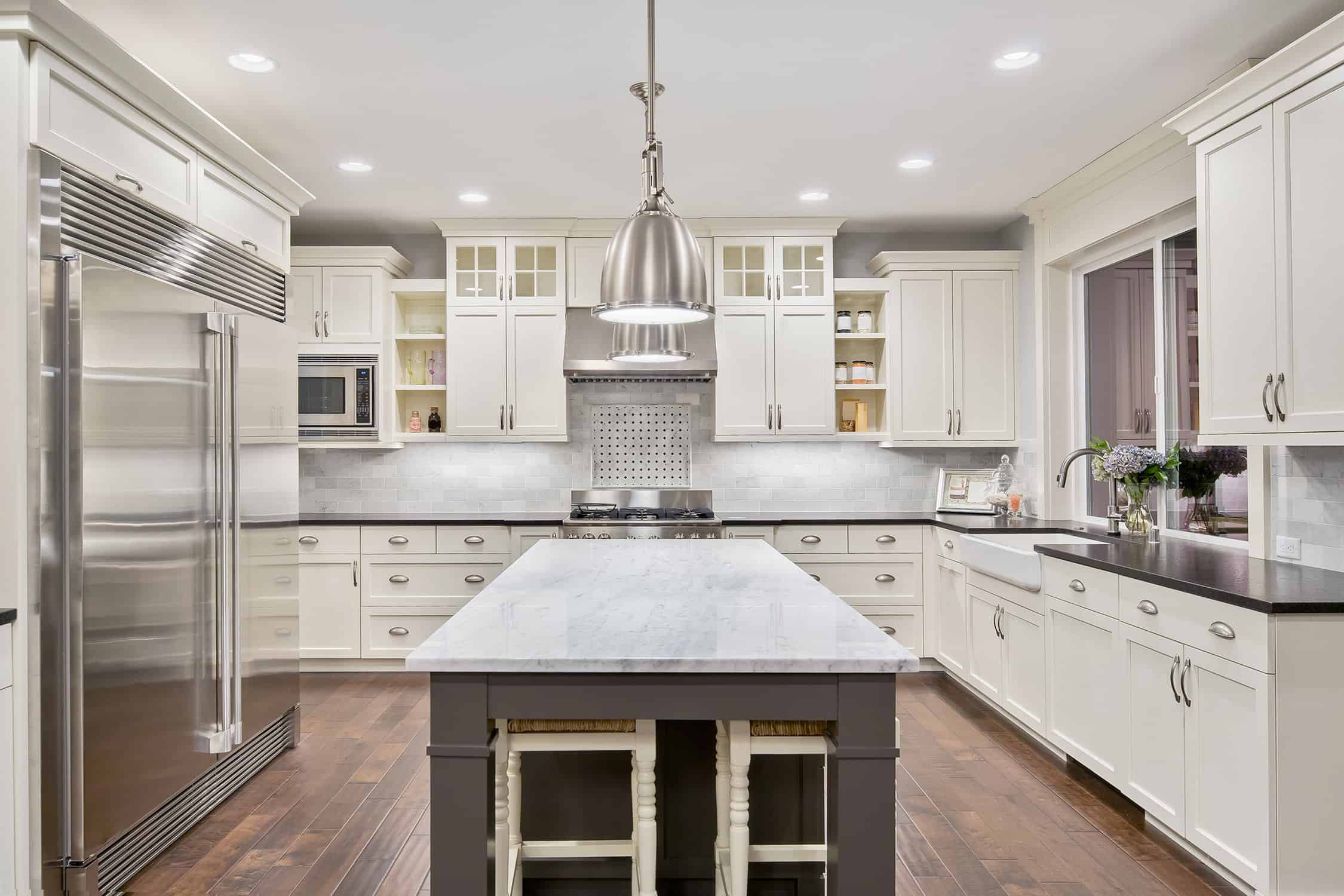
Two-tone cabinets can work when one finish clearly leads and the second has a defined role. The island, lower cabinets, or a separate bank of cabinetry can carry the stronger color.
The wall color should support both cabinet finishes. If it only works with the island but clashes with the perimeter cabinets, the palette still needs work.
Color Cat Painting’s guide to cabinet painting versus replacement can help if you are still deciding how far to take the kitchen update.
Lighting Should Be the Final Filter
Instead of relying on a rule about Pacific Northwest light, north-facing rooms, or warm bulbs, test the samples under the lighting the kitchen actually has.
Turn on recessed lights, pendants, under-cabinet lighting, and nearby fixtures. Compare the wall and cabinet colors again after the natural light is gone.
A color that looks good in daylight but feels wrong every evening is not the right choice for the room.
Choose Sheen by Product and Surface Condition
Satin and semi-gloss are common in kitchens, but one sheen is not automatically right for every wall, cabinet, trim surface, or paint line.
Higher sheen can make drywall repairs, texture, and roller marks easier to see. Cabinet doors and drawer fronts also need a coating system designed for repeated hand contact rather than a standard wall finish.
Choose the exact coating and sheen together after the surface condition and cleaning needs are clear.
Do Not Let Resale Claims Make the Color Decision
Paint-color studies can be interesting, but they should not be treated as a guaranteed change in home value. Buyer response depends on the full condition, market, finishes, layout, and presentation of the home.
If resale matters, focus on a clean, well-maintained palette that works with the kitchen materials instead of chasing one color because of a projected dollar figure.
Test the Full Palette Together
Do not approve the wall color by itself if the kitchen includes several strong finishes.
Color Cat Painting’s color selection guide provides more context for comparing colors throughout the home.
Kitchen Painting With Color Cat Painting LLC
Color Cat Painting LLC is a locally owned painting contractor based in Kent and serving Sammamish, Seattle, Bellevue, Kirkland, Tacoma, Issaquah, Newcastle, Mercer Island, and surrounding communities.
The company was founded in 2023 by Zhandulat Gabpassov and has completed more than 350 projects. Current company information confirms free on-site estimates, complimentary color consultations with booked projects, daily communication, licensed and insured service, and a two-year workmanship warranty.
For cabinet projects, Color Cat uses a structured five-day process that includes protection, surface preparation, primer, topcoat, reinstallation, cleanup, and sprayed cabinet doors for a smooth factory-style finish.
Frequently Asked Questions About Paint Colors for Kitchen Projects
What paint colors for kitchen walls are popular in 2026?
The 2026 NKBA report shows strong support for neutrals, greens, and blues. Use those families as a starting point, then compare them with your cabinets, counters, backsplash, flooring, and lighting.
Should I choose the cabinet color or wall color first?
If the cabinets are changing, choose their direction first because they carry more visual weight. If the cabinets are staying, use their finish to narrow the wall color.
Do small kitchens need light wall colors?
No. Light colors can reflect more light, but mid-tone or deeper colors can also work when the cabinets, counters, trim, and lighting provide enough contrast.
What sheen should I use on kitchen walls?
The best sheen depends on the exact paint product, wall condition, lighting, and cleaning needs. Choose the coating and sheen together rather than using one universal kitchen rule.
How should I test kitchen paint colors?
Compare wall and cabinet samples together beside the countertop, backsplash, flooring, hardware, and appliances. Check the palette in daylight and under the kitchen lights at night.


